-
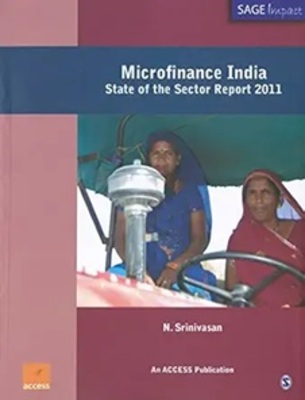
Microfinance India: state of the sector report 2011; (Microfinance in India (MFI)), 1st edition
N Srinivasan
Microfinance India: State of the Sector Report 2011 presents the growth of the microfinance sector in India in its entirety. It offers in-depth, well-researched and thoroughly analysed evidence on how the sector has made an impact at various levels of the economy and society. The report provides most recent statistical data relating to the sector's growth and expansion across models. It highlights perspectives on current issues and documents new interests, new investments and innovations in the sector. The report collects information from authoritative sources, studies and reports on the sector and field studies on specific developments of interests. It also brings perspectives from key policy makers through exclusive interviews. Highlighting on more topical themes, this year's report begins with an overview of the microfinance sector, which faced significant problems during 2010-11. It then evaluates the performances of the SHG and MFI models and discusses thematic issues such as social performance management and financial inclusion in detail. The Andhra Pradesh events have been covered in depth in an exclusive chapter. The newly launched National Rural Livelihoods Mission has been critically examined for the first time in this year's report. As the best reference book on the annual trends and progress of the Indian microfinance sector, this report is a must for every microfinance practitioner.
-

Developing econometrics
Hengqing Tong, Yangxin Huang, and Telikicherla Krishna Kumar
Statistical Theories and Methods with Applications to Economics and Business highlights recent advances in statistical theory and methods that benefit econometric practice. It deals with exploratory data analysis, a prerequisite to statistical modelling and part of data mining. It provides recently developed computational tools useful for data mining, analysing the reasons to do data mining and the best techniques to use in a given situation. Provides a detailed description of computer algorithms. Provides recently developed computational tools useful for data mining Highlights recent advances in statistical theory and methods that benefit econometric practice. Features examples with real life data. Accompanying software featuring DASC (Data Analysis and Statistical Computing). Essential reading for practitioners in any area of econometrics; business analysts involved in economics and management; and Graduate students and researchers in economics and statistics.
-

Accounting: made easy, 2nd edition
Rajesh Agrawal and R Srinivasan
This new edition of Accounting Made Easy continues to provide a simple and easy-to-assimilate introduction to the subject of Financial Accounting. The structure of the book has been defined and built around two levels. The first level helps the readers to build an understanding of accounting in a step-by-step manner. The second level builds a bridge between the accounting learnt in the first level and the real-world accounting. The book follows a novel ‘Learn by Doing’ approach which engages the reader in work modules while one reads the book.
-
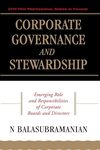
Corporate governance and stewardship: emerging role and responsibilities of corporate boards and directors
N Balasubramanian
Corporations have grown enormously...to a position of pre-eminence, such that their assets and revenues exceed the GDP of several sovereign countries put together. That such a powerful component of the economy is creating enormous national wealth...is not only a matter of great satisfaction to national governments, but also a cause of severe concern to ensure that it operates in conformity with accepted norms… there is a real possibility of expropriation of the created wealth and wealth-creating assets by those in operational control of the enterprise. It is in a country's national economic interest to contain such devious practices..." "...Corporate governance is considered an inseparable element in the country's economic DNA...It is the government's responsibility to provide for an orderly environment that would inspire confidence and trust on the part of domestic and international investors..." This compelling rationale for good corporate governance is best driven home by a growing incidence of corporate failures and misdemeanours such as those in Enron, WorldCom, Lehman Brothers, and Satyam, and an equally growing demand for 'setting things right in the boardroom'. Responding to this demand, Corporate Governance and Stewardship comes as a timely offering from a dedicated proponent and strategist of good governance.
-

The concise Oxford companion to economics in India
Kaushik Basu and Annemie Maertens
What led to India's growth turnaround and the emergence of India as a global player? Will this growth path prove self-sustaining? is the growth in inequality an inevitable consequence of economic liberalization? What caused the financial crisis of 2007-9 and the accompanying recession? The Concise Oxford Companion to Economics in India provides readers with issues and concepts that will help them form their own opinion about diverse questions related to the Indian economy. With more than 120 entries arranged sectorally and a statistical appendix that provides key comparative data and data sources, this authoritative yet accessible companion can be used by students of economics and management, business executives, journalists, bureaucrats, and business analysts.
-

Financial management, 1st edition
Jonathan Berk, Peter DeMarzo, and Ashok Thampy
Using a unifying valuation framework based on the Law of One Price, this book sets a new standard for corporate finance textbooks. Financial Management blends coverage of time-tested principles and the latest advancements with the practical perspective of the financial manager. With this ideal melding of core content (with modern topics and innovation) with proven pedagogy, the text establishes a new canon in finance. The book offers coverage of the major areas for introductorylevel MBA students as well as the depth required in a reference textbook for upper-division courses. It aims at equipping students with a solid grounding in the core financial concepts and tools needed to make good decisions. Pedagogical featuresinclude common mistakes boxes, step-by-step examples, and concept check focus on modern research and practice, use of Indian examplessuch as RBI, ICICI, TATA Motors, Infosys, CRISIL and TATA Nano Excellent instructors’ and students’ support package in the form of solution manual, instructors’ manual, PowerPoint presentations, My Finance Lab, and a study guide contents.
-

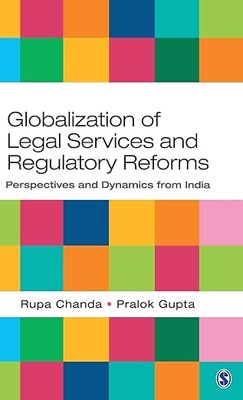
Integrating services in South Asia: trade, investment, and mobility
Rupa Chanda
In this era of globalization, every region and country in the world is pursuing some kind of integration to further its economic, geo-political, and strategic interests. This book explores the prospects for and challenges to services integration in South Asia through an in-depth analysis of services such as telecommunications, energy, tourism, health, and education. Identifying trends in performance, policy issues, and the status of intra-regional trade and investment initiatives, the book argues the case for services integration under the South Asian Free Trade Area (SAFTA). It also stresses the need to address cross-cutting issues of regional mobility of service providers, taxes, transport, trade, research and development, and regulatory cooperation. Expanding the existing work on South Asian integration to cover services from an intra-regional perspective, this book is an important reference for future academic and policy work in South Asia. The industry, country, and regional level statistics provided by the book serve as a useful resource for taking stock of output, employment, trade, and investment in services in this region.
-

Route to customer satisfaction is through employees: impact of management practices
Amit Gupta
strongly belief that the route to customer satisfaction is through employees, especially for service businesses where customer interface is a critical part of the delivery process. The current book builds on the research on positive influence of employees' perceptions of service climate and service quality on customer satisfaction. We test a model between employees' perceptions of service climate, capability, quality and employee service behaviors, with customer satisfaction in a State Government agency. Results show that management practices related to coordination and service emphasis positively impact employee service capabilities. Employee service behaviors and service capability positively impact employees' perceptions of service quality. Only employee service behaviors have an impact on customers' perceptions of service quality. No relationships were found between employees' perceptions of service capability or service quality with customers' perceptions of service quality. Results using HLM indicate that HR practices, service emphasis, service behaviors and service capability positively impact and interpersonal relationships negatively impact customer satisfaction.
-
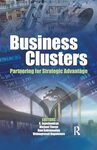
Business clusters: partnering for strategic advantage
C Jayachandran, Micheal Thorpe, Ram Subramanian, and Vishnuprasad Nagadevara
The book contains a selection of papers on business clusters in its multiple perspectives. It has evolved from the research symposium organized by The Society for Global Business and Economic Development, an international group of academicians, at Dubai during January 2009. It begins with an introduction to the concept of clusters, and then examines their link to a host of strategic issues, such as their nexus to competitive advantage, their performance vis-á-vistheir competitors who are notsimilarly agglomerated, and the challenges in measuring the performance of clusters. Regional economic clusters have serious policy implications. Governments, local as well as national, have used clusters as the unit for investment and infrastructure upgrading policies. It focuses on the normative aspects as well as practices and provides pointers on how public policies can help the development and growth of regional economic clusters.
-
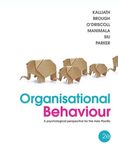
Organisational behaviour: a psychological perspective for the Asia-Pacific, 2nd edition
Thomas Kalliath, Paula Brough, Michael Driscoll, Mathew J Manimala, and Oi-Ling Siu
Organisational Behaviour, 2e (Kalliath et al. 2014) continues to combine the strength of organisational behaviour’s practical application approach with organisational psychology’s basis in research scholarship. is text is written by a truly authentic global and regional author team, and re ects on their varied cultural and theoretical backgrounds and extensive teaching and research experience across Australia, New Zealand, Hong Kong and India. Organisational Behaviour, 2e has a number of pedagogical enhancements that help students to conceptualise practical applications through real-world examples, features and hypothetical case studies. e enhancements include Streamlined Learning Objectives, New Feature boxes titled ‘Re ective Practitioner’ in each chapter and Focus Questions with model answers in the Instructor’s Manual. is new edition also features a new chapter focusing on research methods in organisational behaviour and half chapter inclusions for Job Design and Occupational Health.
-

Organisational behaviour: a psychological perspective for the Asia Pacific
Thomas Kalliath, Paula Brough, Michael O'driscoll, Mathew J Manimala, and Oi Ling Siu
Organisational Behaviour: An Organisational Psychology Perspective for the Asia Pacific (OB) is an exciting new addition to our Psychology/B and E lists. OB is a ground up original with an international author group from Hong Kong, India, Australia and New Zealand. Between them, the authors have generated a huge publishing and research output as well as receiving numerous awards for teaching and service excellence between them. The authors' teaching excellence is reflected in the carefully considered pedagogical features found throughout the text. OB is a unique offering for MGH; an interdisciplinary text that combines theory and practice and sits between traditional OB and OP. The interdisciplinary nature of the text meets the market needs and services a market niche in which there are no real competitors.
-

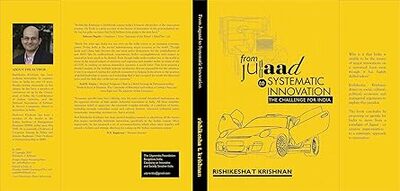
From Jugaad to systematic innovation: the challenge for India
Rishikesha T Krishnan
Why is India unable to be the source of major industrial innovations on a sustained basis even though it has highly skilled talent and a penchant for jugaad (creative improvisation)? This book draws on social, cultural, political, economic and managerial arguments to explain this paradox. Replete with a strong conceptual framework, case studies, examples, and data relating to India’s innovation performance, this book is essential reading for anyone concerned with the future of Indian industry. The book consists of five chapters. Chapter 1 introduces the topic and explains why innovation is important for India. Chapter 2 draws on theory and country experiences to identify the factors influencing innovation output. Chapter 3 provides a snapshot of India’s current position on key innovation indicators. Chapter 4 seeks explanations for why India has been unable to achieve its innovation potential. The final chapter proposes a road map to put India on a higher industrial innovation trajectory.
Printing is not supported at the primary Gallery Thumbnail page. Please first navigate to a specific Image before printing.