-

Marketing management: a south asian perspective, 13th edition
Philip Kotler, Kevin Lane Keller, Abraham Koshy, and Mithileshwar Jha
-

Organizational growth and success: a case research study of PTC India Ltd.
R Ravi Kumar and T V Ramanayya
-

Consumer behavior and branding: concepts, cases and readings
S Ramesh Kumar
India is one of the emerging markets that pose a unique set of challenges to marketers. The importance of the context and the usefulness of concepts in the Indian context is the core proposition of Consumer Behaviour and Branding: Concepts, Readings an
-
Enterprise support systems: an international perspective, 1st edition
Mathew J Manimala, Jay Mitra, and Varsha Singh
Enterprise Support Systems: An International Perspective focuses on the issues surrounding enterprise support systems, giving a comprehensive understanding of how they influence enterprise creation and growth in various nations. Against the background of globalized economy, this collection covers issues pertaining to countries at diverse stages of enterprise development and offers valuable insights into the support needed at these stages. The chapters in this compilation present a comprehensive theoretical perspective on the formative and the facilitative environments of enterprise creation and development, emphasizing the two-way role of learning and education systems in bringing out a change within these systems. They deal with a range of issues that form the core of enterprise support systems, such as availability of finance, socio-cultural environment, personality dimensions, education systems, enterprise clusters and technology transfer. The theoretical debates raised by the issues discussed in this book will provide value-addition and solution-oriented tools for researchers, entrepreneurs, financiers, venture capitalists, trainers and educators.
-

An alternative paradigm of democratization: a game-theoretic model and empirical evidence
Soumyanetra Munshi
This monograph presents a theoretical perspective on democratization, and also tests it empirically. Various models of democratization have been proposed in the literature, like enfranchisement in response to threats of revolution, threats of war, and split of interests among elites. However there seems to be instances of democratization that do not follow any of these patterns. For one, these theories rely on redistributive aspects of franchise extension. My model captures democratization arising out of an evenly-balanced partisan competition between political parties, large rents from office and a part of the enfranchised benefiting from extension of franchise. Hence I can explain instances of suffrage extension with little or no redistributive repercussions like women's suffrage. My model also fits the democratization experiences of several countries like Sweden, Chile, and Italy. I test this theory in the case of women's suffrage in the states of the United States. Using event history analysis, I find evidence that early enfranchisement of women in some of the states, was caused, among other factors, by the intensity of competition between Republicans and Democrats.
-

Institutional Dynamics and the Evolution of the Indian Economy
Murali Patibandla and Rajesh Kumar
This edited volume highlights the interplay between the evolving institutions and the growing economic dynamism of the Indian economy. The book provides a state of the art interdisciplinary review of the Indian political economy and cultural psychology and it draws upon the contribution of academic scholars who are intimately familiar with India.
-
Supply chain management: text and cases, 1st edition
Janat Shah
Supply Chain Management: Text and Cases integrates concepts and application to turn the spotlight on innovations-the need of the hour in supply chain management. Janat Shah brings all his experience and knowledge of supply chain management to this book to present the reader with the concepts, using examples, caselets and case studies from the Indian context. He has adopted a reader-friendly approach to introduce the fundamentals to both students and practitioners. Divided into five parts, this book presents numerous examples and caselets, thus blending concepts with current industrial practices and state-of-the-art know-how, for enhanced understanding and a holistic view of supply chain management. A complete part of the book is devoted to innovations in supply chain management that may be used by firms operating in competitive markets to improve their performance.
-
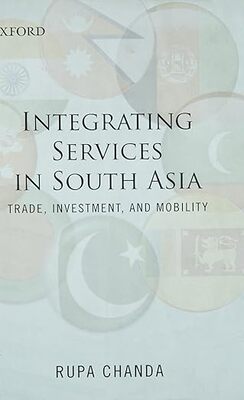
Low-skilled workers and bilateral, regional, and unilateral initiatives
Rupa Chanda
Th e lack of progress on trade in services through the movement of natural persons, particularly of low-skilled persons, under the General Agreement on Trade in Services (GATS) has been a matter of concern for Least Developed Countries (LDCs). However, there are a growing number of initiatives at the unilateral, bilateral and, to a limited extent, at the regional levels to manage cross-country temporary labour fl ows. Many of these initiatives, particularly those at the national and bilateral levels, accommodate the movement of low- and semi-skilled workers. Many countries are making use of national schemes, such as special classes of work permits and visas to facilitate the entry of agricultural, seasonal and temporary workers. At the bilateral level, countries have entered into bilateral labour agreements covering specifi c types of workers and geared to meet demand in specifi c sectors. Countries are also including labour mobility provisions targeted at specifi c sectors and occupations under the broader rubric of bilateral economic cooperation or partnership agreements. And at the regional level, in the context of some regional agreements, mechanisms have been introduced or negotiated to facilitate intraregional labour mobility, though usually for limited high-skilled categories and occupations. Th is paper attempts to understand how bilateral and unilateral schemes manage the temporary movement of lowskilled workers by examining their various features. Th e aim is to draw useful lessons for the GATS negotiations on Mode 4 and for future agreements that address Mode 4. Th e study examines the operational, institutional, fi nancial, welfare and human development features of several arrangements to derive their positive and negative aspects. Based on the best practices that characterize these agreements, the paper suggests how some of these features could be incorporated in the context of the GATS Mode 4 commitments and off ers. Underlying this learning-based approach is the larger objective of maximizing development benefi ts and of contributing towards a more strengthened and holistic development-friendly policy position on migration and the short-term movement of persons. Sections 2, 3 and 4 provide an overview of bilateral, unilateral and other broader agreements and initiatives respectively, which cover the temporary movement of low-skilled workers. Section 2 examines the bilateral labour agreements between Spain and Ecuador and the Canadian Seasonal Agricultural Worker Program (CSAWP) between Canada and Mexico and Canada and the Caribbean countries. Section 3 covers unilateral initiatives by key host countries to target specifi c types of low-skilled workers. Th e cases covered are those of the United States under its agricultural and industrial worker schemes (H-2A and H-2B, respectively), the United Kingdom under its sector-based scheme and its seasonal agricultural workers scheme, the Republic of Korea under one of its temporary guest worker arrangement, the Employment Permit System, and the Gulf countries under their temporary labour contract system. Th is section also discusses issues of abuse and exploitation of low-skilled workers, including female migrant workers. Section 4 discusses an agreement that facilitates semi-skilled migration in the context of a broader economic agreement. Th e case that is highlighted is that of the Japan-Philippines Economic Partnership Arrangement (JPEPA) which covers the movement of caregivers and nurses from the Philippines to Japan. Section 5 examines the role played by key source countries in managing low-skilled labour fl ows. Th e cases of the Philippines and Sri Lanka are highlighted to illustrate the administrative, fi nancial, worker protection, welfare and capacity-building mechanisms used by such governments to maximize the benefi t from low-skilled temporary movement and in making bilateral labour agreements work. Th e discussion shows that source countries need to invest in creating institutional capacity and frameworks that allow them to address a wide range of economic, social, legal and human development related issues associated with worker mobility, whether or not they have entered into managed bilateral arrangements. Section 6 outlines the commonalities and diff erences across these diff erent cases and the positive and negative aspects within and across the various cases. What emerges from this overview is that managed temporary worker arrangements are generally well laid out and specifi c in terms of defi ning scope, laying out the operational features, obligations on various parties, institutional frameworks and incentive and disincentive mechanisms. Th ey involve a mix of specifi city and binding obligations with regard to work terms, conditions and enforcement mechanisms, while permitting some degree of fl exibility and customization to suit changing circumstances. Bilateral arrangements are also more holistic in their approach to worker mobility as they look beyond entry and stay issues to address a variety of developmental, social and institutional issues that have a bearing on the outcome and long-term viability of such arrangements. Section 7 outlines some of the features and best practices from the discussed cases which can be taken forward into the GATS Mode 4 negotiations and other agreements, and the modalities for doing so under the GATS framework. Th ese include making GATS Mode 4 commitments more explicit and unambiguous in defi nition and scope, and going beyond horizontal to sector-specifi c commitments in Mode 4. Further, the various conditions seen in bilateral and unilateral schemes covering low-skilled workers, such as quotas, economic needs test, wage parity requirements and even obligations on source countries in terms of occupational certifi cation, screening and placement, could be inscribed as limitations in the sectoral Mode 4 commitments. Th e paper also suggests that mechanisms are required to provide juridical affi liation for low-skilled workers which in turn would necessitate the establishment of institutional frameworks or the authorization of designated agencies to provide such affi liation to low-skilled, temporary workers who are deployed overseas. Th us, one of the main recommendations that emerges is the need to bring in institutional checks and controls in the migration process and to introduce more coordination and joint responsibility between sending and receiving countries under the GATS Mode 4 frameworks. Section 8 concludes the paper by summarizing the key positive elements that emerge from the bilateral and unilateral arrangements discussed in the paper. It also highlights some areas which could be examined further to make any frameworks on temporary low-skilled worker mobility more development-friendly. Th e paper, however, emphasizes the importance of multilateral negotiations on labour mobility for low-skilled and semi-skilled workers. It notes that while bilateral and regional approaches can serve as benchmarks for the GATS, these approaches cannot be at the cost of multilateralism. All need to be pursued at the same time. Liberal market access commitments for semi- and low-skilled workers under the WTO would help LDCs address many of the Millennium Development Goals while also benefi ting countries and potentially breaking the current stalemate in the Doha Round negotiations in services. Th is paper also stresses the need for sending countries to invest in capacity- and institution-building to manage the migration process and to incorporate human development dimensions into migration policy regardless of whether they adopt a bilateral, regional or multilateral approach.
-

Managerial accounting
Ronald Hilton, G Ramesh, and M Jayadev
Managerial Accounting, in its seventh edition, not only introduces the basic principles of accounting, but also details the concepts of managerial accounting, thereby showing its relevance to the overall management process. The book emphasises on the key topics which are required to have an insight into the subject. Topics are such as Planning, Controlling and Cost Management Systems, Decision Making, Planning, Strategising, Budgets, Costing, Analysis and Monitoring have been explained in depth in this book. Product versus period costs, issues pertaining to manufacturers, raw materials, cost of goods manufactured and cost of goods sold and other concepts are discussed effectively. The book further introduces you to the fundamental tools of managerial accounting, providing you with the insight that you need in order to understand the ways in which this field is evolving. Managerial Accounting is an accounting guide that has been written by M Jayadev, G Ramesh and Ronald Hilton. It was published in 2008 by Mcgraw - Hill Education and is available in paperback.
-

Financial accounting: a managerial perspective
R Narayanaswamy
It has been widely adopted in management schools across the country and fully appreciated by the students and teachers for its indepth analysis of the principles of Financial Accounting and its simplicity of style. The new edition brings in comprehensive revision of the diverse topics discussed, keeping in view the needs of both the budding and the practising manage While the text continues to emphasize the principles and the why of accounting, what distinguishes it is the rich repertoire of examples drawn from the Indian as well as the global accounting scenario.
-

Facing the future: Indian pension systems
David J W Hatton, Naren N Joshi, Fang Li, R Vaidyanathan, S Jyothilakshmi, Shubhabrata Das, and Sankarshan Basu
Printing is not supported at the primary Gallery Thumbnail page. Please first navigate to a specific Image before printing.